| |
| Wednesday, 16 September 2026 |
| Art's Hidden Secrets |
| Tony Rawlins |
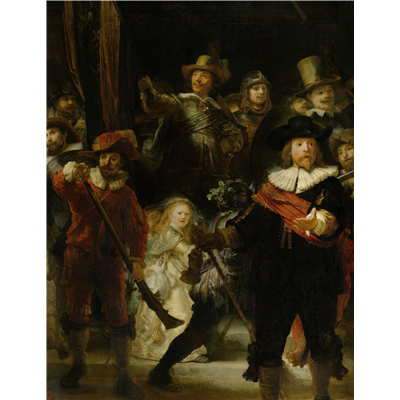 |
This lecture is about the messages, codes, and self-portraits found in famous works of art. For example: In Rembrandt’s Night Watch, what’s a little girl doing there, in a party dress with a dead chicken hanging from her waist? Given Michelangelo’s statue of David was originally to be placed high on the Cathedral roof, why did he carve his eyes heart-shaped, when it would be impossible to see them from the ground? Where can you find the hidden portraits of Velázquez, Vermeer, Raphael, Titian, Filippo Lippi and Botticelli? In Gainsborough’s Mr. and Mrs. Andrews, why is there an unfinished area of paint on her lap?
Tony Rawlins started his career in advertising in 1965 as a mail boy in J. Walter Thompson. He graduated through the training system there to become an account director and subsequently worked in a number of agencies before setting up on his own in 1985. There, he handled primarily Guinness advertising in Africa and the Caribbean, where he produced many commercials and print ads for them over a period of 15 years. He remains active as a consultant in the industry, but more recently has concentrated on more philanthropic projects - producing a film in the rural villages of Nigeria for the London School of Hygiene and Tropical Medicine and completing a sanitation project in Haiti after it was devastated by Hurricane Matthew in 2016. He has been a member of The Arts Society for many years and has been an accredited lecturer since 2017. |
|
| Wednesday, 21 October 2026 |
| The Art of the Baltics: Estonia, Latvia and Lithuania |
| Rosamund Bartlett |
 |
This lecture explores the role that the arts have played in forging the distinct cultural identities of Estonia, Latvia and Lithuania. Tracing their long journeys to independence, we will look at the song festivals which united them during centuries of foreign occupation, and at the careers of artists such as the Lithuanian painter and composer Mikalojus Čiurlionis, the Latvian artist and photographer Gustav Klutsis, and the Estonian composer Arvo Pärt.
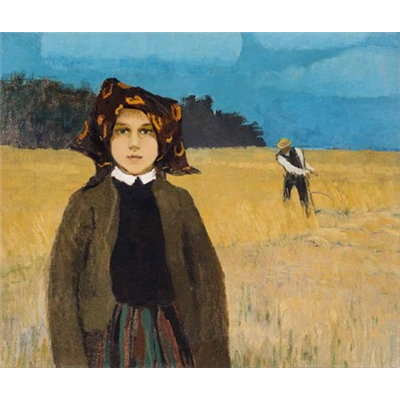
Rosamund Bartlett is a writer, lecturer and translator. Her work ranges across the arts, from painting to music, and across cultures, from Italy, France and Germany to the countries of Northern and Eastern Europe. She began her career as an academic in Slavic studies after completing her doctorate at Oxford, and has held fellowships both in the UK and at the European University Institute in Florence. She is an Honorary Research Fellow in the Faculty of Modern Languages in Oxford, and in 2024 became a Royal Literary Fund Fellow at Brasenose College. The author of several books, including biographies of Chekhov and Tolstoy, and a study of Wagner's influence in Russia, she is also well known as a translator. Painting: Peasant Girl (1904) by Johann Walter |
|
| Wednesday, 18 November 2026 |
| A Photographic Odyssey, Shackleton’s Endurance Expedition captured on camera |
| Mark Cottle |
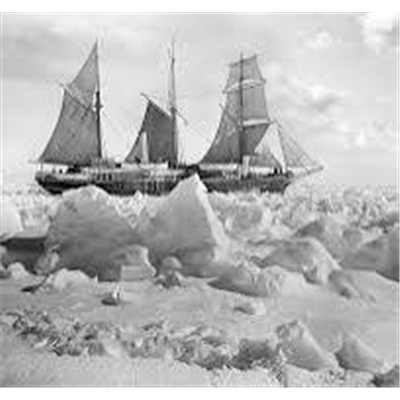 |
On Ernest Shackleton’s third Antarctic expedition in 1914, his ship, the Endurance, was trapped and eventually crushed in the pack ice. After camping for five months on the ice, Shackleton’s men rowed to the remote Elephant Island. From there, Shackleton sailed for help to South Georgia over 800 miles away. Over three months later he returned to rescue the crew of the Endurance. Frank Hurley, one of the great photographers of the 20th century, was the expedition’s official photographer. His photographs are a visual narrative of an epic journey which capture with great artistry new and amazing landscapes within which a remarkable human drama is played out.
Mark Cottle was born on the Isles of Scilly, educated at Truro School in Cornwall and graduated from Birmingham University with an MA in Late Medieval Society and Culture. He has spent his whole career, at home and abroad, teaching and lecturing in Further and Higher Education. Joining The Arts Society in 2007, Mark’s lectures have focused on the English medieval and the sixteenth century periods together with the lives of Ernest Shackleton and Winston Churchill which are a longstanding interest of his. Mark’s lecture includes an up-to-date annotated reading list. |
|
| Wednesday, 16 December 2026 |
| The Art of the Christmas Cartoon
|
| Harry Venning |
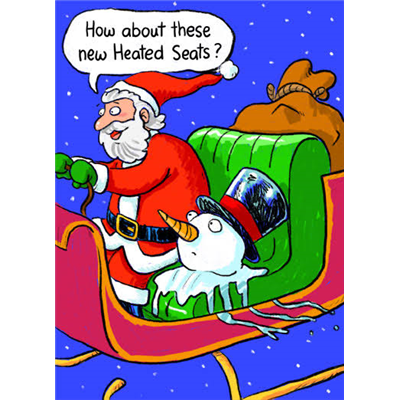 |
Harry Venning has been a professional cartoonist for thirty years, during which time he has provided cartoons for several high profile UK publications (The Guardian, Radio Times) as well as for countless more obscure titles (British Journal of Wound Care). In The Art of the Christmas Cartoon Harry will be adapting his lecture: The Art of the Cartoonist for the Christmas season, tracing the history of his profession with examples from early practitioners like Cruickshank and Hogarth, to more contemporary artists such as Giles and Schulz, bringing events right up to date with cartoons produced fresh on the page that day! Yes, Harry will.
Harry Venning is a cartoonist, comedy writer and performer. His cartoons have appeared in publications as diverse as Mathematics Today, Radio Times, Music Teacher and The Stage. For 25 years he provided The Guardian with the weekly strip cartoon Clare in the Community, about an unaware and empathy free social worker. In 2004 he developed Clare in the Community into a successful BBC Radio 4 sitcom starring Sally Philipps which ran for twelve series. When not at a desk, Harry tours his cartoon workshop around schools, theatres, arts centres, cruise ships and festivals. He is an Honorary Fellow of the English/Creative Writing departments of Aberystwyth University. He cannot draw hands or horses. |
|
| Wednesday, 20 January 2027 |
| Victoria and Albert, Art and Love |
| Barbara Askew |
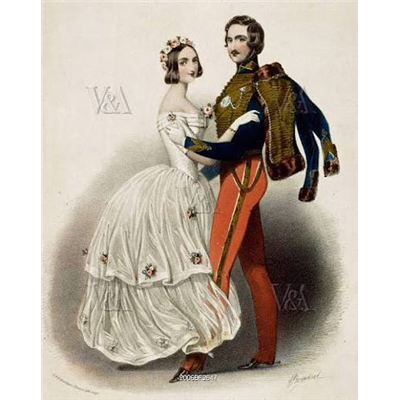 |
Queen Victoria and Prince Albert were first cousins, born just three months apart in 1819. Their shared enthusiasm for art and music endured throughout the 22 years of their marriage. In this lecture Barbara will demonstrate their love through the works of art and jewellery they gave each other for birthdays, Christmases and anniversaries.
Barbara Askew grew up in Eton with Windsor Castle as part of her daily view. She is the acknowledged expert on Royalty, the Royal Collection and Windsor Castle among Blue Badge guides and has acted as the liaison between tourist guides and Windsor Castle for over 30 years. She is the only Blue Badge guide to have been invited to three Royal Weddings at Windsor Castle. Barbara has run training courses on Windsor Castle and the surrounding area and she leads the elite team who guide the tours of Eton College. As well as Windsor Castle she specialises in guiding in museums, art galleries and gardens. She has a BA Hons in History, a Diploma in Education and a Royal Horticultural Society Certificate in Horticulture. |
|
| Wednesday, 17 February 2027 |
| Persepolis: art, architecture and ideology of the Persian Empire |
| James Renshaw |
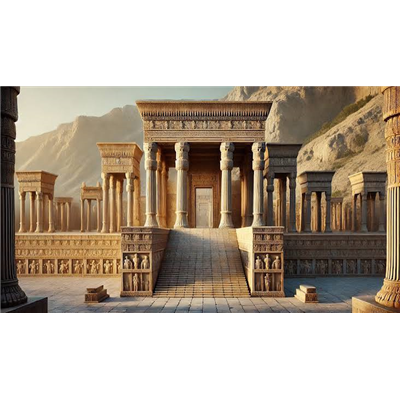 |
The Persian empire exploded into life during the middle of the 6th century BC and was the largest empire in the world for the next two centuries. It stretched from the Mediterranean in the west to the Indus valley in the east, from the Eurasian steppes in the north to Egypt and Arabia in the south. In around 515, its third Great King, Darius I, commissioned the building of a new city, Persepolis, with his palace at its centre. We know a great deal about this palace, and one of its central features, the Apadana Staircase, can be seen in replica in the British Museum. What can this palace and its art tell us about the ideology of this extraordinary and influential empire?
Following a degree in Classics from Oxford University, James Renshaw taught Classics at secondary school level, most recently at the Godolphin and Latymer in London. Here, he ran the school’s Ancient World Breakfast Club, which has an ethos similar to that of The Arts Society. Since 1998, James has published a number of textbooks related to the classical world, including: In Search of the Greeks and In Search of the Romans. In addition to school teaching, James has lectured for the V&A Academy. He is currently working on a book due out in 2027 on the history of the marathon race. The Marathon: an Epic History. |
|
| Wednesday, 17 March 2027 |
| Neo Impressionism, how the Painted Dot communicated light and colour |
| Joshua White |
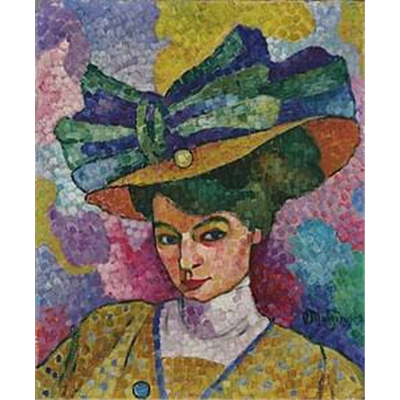 |
The Neo-Impressionists are arguably the first international modern art movement. Georges Seurat exhibited with the Impressionists but became increasingly drawn to scientific theories of colour and optics. He aimed to find a 'harmony' more enduring and resonant than the Impressionist interest in the fleeting moment. Inspired by ancient art of Egypt, Greece and Rome, Seurat began an art movement that attracted followers in Europe beyond France. The deliberate 'division' of colour into single points of pigment was believed to act as the fundamental building blocks for a painting. By constructing an image with thousands of dots, the human eye could begin to blend colours optically in the eye and the mind. The process stripped back a painting to its essence. The talk explains how expression of pure colour was found to heighten the visual experience and achieve a new radiance on the canvas.
Joshua White is an enthusiastic and experienced art historian and lecturer who thoroughly enjoys sharing his love and knowledge of fine art, photography and design with an audience. He is an experienced lecturer in 19th and 20th century European and American art, international contemporary art, photography, design and architecture. Spending 20 years teaching at Christies, Joshua was director of their London Art Course and other courses in the field of modern and contemporary art, ranging from Impressionism and Surrealism to photography and modern sculpture. Drawing on his media experience as a former BBC journalist, Joshua is also a founder and presenter of The Art Channel, an online project documenting and interpreting art exhibitions and artworks in museums and commercial galleries. Elsewhere, he has lectured at many international museums and galleries together with British and overseas universities. |
|
| Wednesday, 21 April 2027 |
| What to see (or not see) on the Grand Tour: an Itinerary for Eighteenth Century Europe |
| Dr Sarah Pearson |
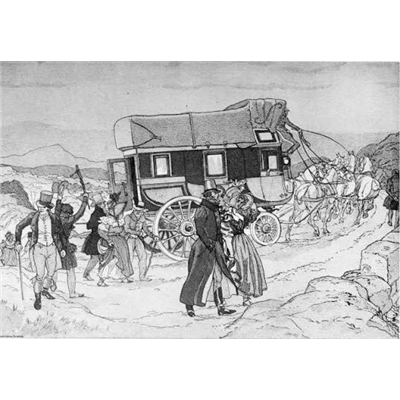 |
The Grand Tour was an 18th century phenomenon in which young men completed their education by absorbing the art and culture of mainland Europe. The countries of western Europe offered a wealth of art, architecture and new experience to the intrepid traveller – but what to see? This lecture examines the visual culture of Europe in the 18th century highlighting the typical itinerary but also illuminating the more exotic possibilities available to travellers.
Sara Pearson holds a First Class BA in Art History from Reading University, an MA in World Art Studies from the University of East Anglia and a PhD in Architectural History, also from Reading. Lecturing for 10 years at Reading and at the University of East Anglia, Sarah now works as a freelance lecturer and teaches at the University of Cambridge (Madingley Hall). |
|
| Wednesday, 19 May 2027 |
| Original and Poetic: Thomas Gainsborough’s Morning Walk |
| Matthew Morgan |
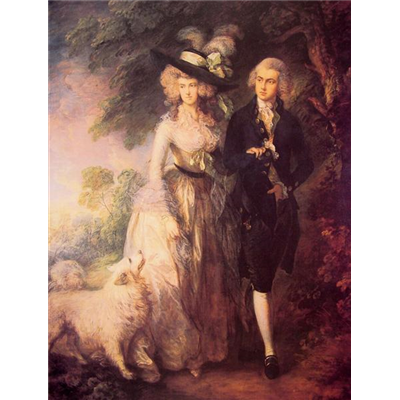 |
Described as one of the most experimental painters of his time, Thomas Gainsborough sought to bring joy and pleasure while seeking to equal the Old Masters. He cultivated a persona that presented him as spontaneous and uncalculated, however, his masterful technique with seemingly rapid hatching and bravura gestural brushwork and his constant inventiveness in the poses and gestures of his sitters speaks of an artist who thought deeply about his work. In this talk we will look at one of Gainsborough’s most admired paintings, Mr and Mrs Hallett, or The Morning Walk as it has become known, to explore the life and technique of this much loved painter.
Matthew Morgan is an independent art historian, educator, and museum professional with a passion for sharing the joy of art. Over the years, he has spoken on subjects ranging from Caravaggio to Kehinde Wiley, though his first love remains the work of J.M.W. Turner and his primary focus is European painting of the 18th and 19th centuries. Matthew’s career has been dedicated to helping people connect with art in meaningful and enjoyable ways, whether through lectures, exhibitions, or creative learning programs. He has lectured widely in diverse settings across Britain and Europe. As Museum Director, Matthew ran Turner’s House in Twickenham, dedicated to the great landscape painter. He also taught for more than eight years at Birkbeck, University of London, and served as Head of the London Learning Team at the Royal Collection. |
|
| Wednesday, 16 June 2027 |
| A Trip along the River Thames in 1749 |
| Peter Ross |
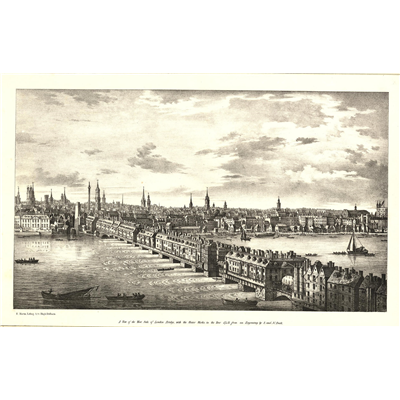 |
Using the extraordinary fourteen foot long printed panorama of the north bank of the Thames created by the Buck brothers in 1749, this lecture will take us on a journey along the early Georgian river from Westminster to the Tower of London. The luminous paintings of Canaletto will bring the journey to life in sunlit colour and the highly detailed map created by John Roque in 1747 will be our constant guide. Along the way we will encounter wharves, warehouses, watermen and water closets, dukes, criminals, cranes and churches, and even a lost palace or two.
Peter Ross has a BA in the History of Art, an MA in London History, and a PhD in the cultural history of the early eighteenth-century criminal, Jack Sheppard. Until 2023, he was the Principal Librarian at the City of London’s Guildhall Library. Peter has appeared on television and radio as a consultant on crime in eighteenth-century London, the history of English food, and Shakespeare’s First Folio. His book: 'The Curious Cookbook, Viper Soup, Badger Ham, Stewed Sparrows, and a Hundred more Historic Recipes' was published in 2012 by the British Library. His recent book: 'Insatiable Appetites: Eating Out in Georgian London' was published by Bodleian Library in May 2026. |
|